
Metal vs. Plastic Enclosures: When to Switch from CNC Machining to Heavy Gauge Thermoforming
When designing industrial equipment, medical devices, or large machinery housings, one of the earliest decisions engineering teams face is the choice of material and manufacturing process for the protective enclosure.
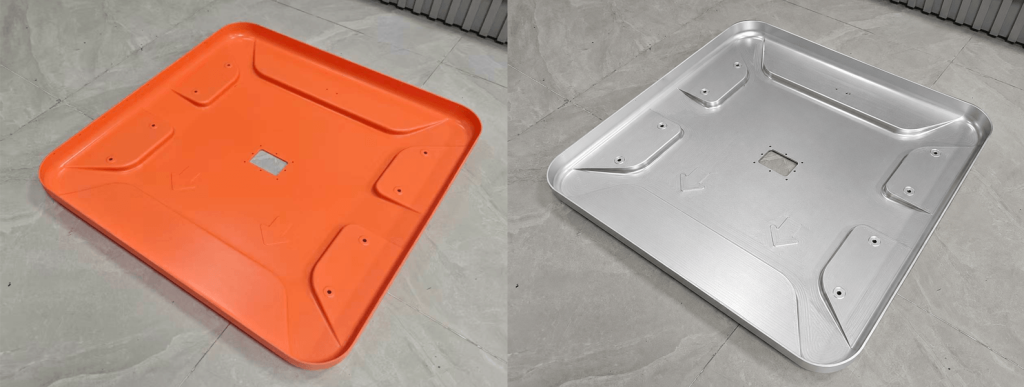
For high-precision, low-volume, or structurally complex internal components, CNC milling and turning services remain the gold standard. Machining a housing out of a solid block of aluminum 6061 or stainless steel provides unmatched structural rigidity, EMI shielding, and tight tolerances. However, as the physical dimensions of the enclosure scale up—such as for large robot shells, medical diagnostic machines, or air source heat pump housings—relying solely on CNC metal cutting can become cost-prohibitive and inefficient.
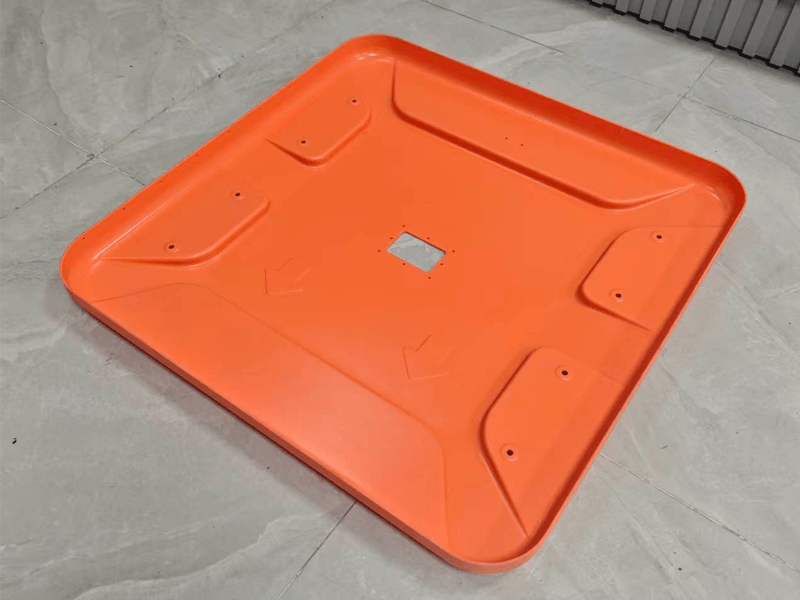
This is where understanding alternative structural manufacturing methods becomes critical for cost reduction. For large, oversized enclosures, switching from metal CNC machining to engineer-grade plastics via heavy gauge thermoforming often yields significant production advantages without compromising durability.
The Cost-Efficiency Breakdown: Tooling and Scale
CNC machining is highly scalable for small, dense, complex parts because it requires no custom tooling or molds. You load the 3D CAD drawing, program the toolpaths, and the 5-axis CNC centers go to work. But if you need an outer shell that measures $1.5\text{ meters}$ wide, machining that from a massive solid billet of metal results in immense material waste (chips) and incredibly long cycle times on the machine bed.
If you consider sheet metal fabrication as an alternative to avoid waste, you are often limited to boxy, geometric shapes. Achieving smooth, aerodynamic, or curved industrial designs requires expensive stamping dies or intensive manual welding and post-processing.
Large-scale plastics production offers a middle ground. While injection molding requires steel molds that cost tens of thousands of dollars and take months to build, thick gauge vacuum forming utilizes single-sided aluminum molds. These molds can be produced quickly via CNC routing at a fraction of the cost. For production runs ranging from a few hundred to a few thousand units per year, the total cost per part drops drastically when utilizing plastic thermoforming.
Weight Reduction and Industrial Aesthetics
Weight is another major variable in modern product engineering. Large metal enclosures add heavy deadweight to mobile equipment, such as AGVs (Automated Guided Vehicles), warehouse logistics robots, or medical carts.
By replacing a metal structure with a heavy-duty plastic shell—made from high-impact ABS, HDPE, or polycarbonate (PC)—you can cut the enclosure’s weight by $40\%$ to $60\%$. This reduces shipping costs, makes onsite installation safer, and in the case of battery-powered robotics, extends operational runtimes.
Furthermore, advanced polymer sheets can be co-extruded with specific surface textures, custom colors, and built-in UV or flame-retardant properties (such as UL94-V0 compliance). You get a finished, automotive-grade cosmetic shell straight out of the forming machine, removing the need for post-machining processes like sandblasting, anodizing, or powder coating.
The Hybrid Approach: Combining CNC and Thermoforming
Choosing between these two technologies doesn’t have to be an all-or-nothing decision. In fact, the most efficient heavy-duty setups utilize both processes in tandem.
A typical high-performance industrial machine features an internal structural frame or core made of precision-machined metal parts—where bearing seats, shafts, and gear alignments require tolerances down to $\pm 0.01\text{mm}$. Then, a rugged, impact-resistant thermoforming vacuum forming plastic skin wraps around that metal skeleton to provide weatherproofing, ergonomics, and branding.
Even within the plastic forming process, CNC technology is indispensable. Once a thick plastic sheet is vacuum-pulled over an aluminum mold, it requires secondary trimming. Leading facilities utilize high-speed 5-axis CNC trimming units to cleanly cut out holes for touchscreens, fan vents, cable routing ports, and door hinges with precise repeatability.
Summary for Procurement and Design Teams
If your project requires tight geometric tolerances, internal threads, high heat resistance, or structural load-bearing capacity, stick with dedicated metal CNC turn-mill setups.
But if you are designing large-scale outer housings, decorative covers, or heavy-duty transport trays where weight, cosmetic curvature, and upfront tooling costs matter, look into a specialized large scale vacuum forming supplier. Balancing both manufacturing methods ensures your hardware product enters the market on time, on budget, and engineered to the correct specifications.